 PixelToBead
THE LITTLE PICTURE-TO-PATTERN WORKSHOP
Cross stitch letter generator
Type a name, initials or a date and get a counted letter chart with DMC thread numbers.
LETTERS, NAMES AND DATES
Capitals read best. One short word needs a wider grid than you expect: start near 120 stitches. The word is drawn on this device and never uploaded.
The flower is an original illustration, converted here with the same engine as your images.
THE SHOPPING LIST
Your DMC thread key
Matching against 489 reference shades.
Screen colors are approximate. Skeins assume two strands, a 25% allowance and ~0.5 inches per strand per full cross at 14-count; check your own tension. “Have it” checks are kept only until this page closes.
| Have it | Symbol | Thread | Shade | Stitches | Est. skeins |
|---|
Palette: MakeBead craft-color-codes, CC BY 4.0 compilation. Adapted to a local Lab matcher. Reference RGB values are not physical thread measurements. DMC is a third-party trademark; PixelToBead is independent.
A REAL LITTLE CONVERSION
From pixels to a thread key
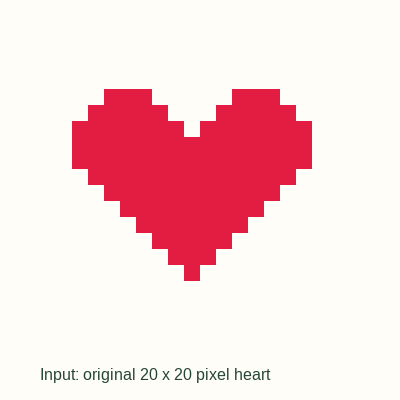
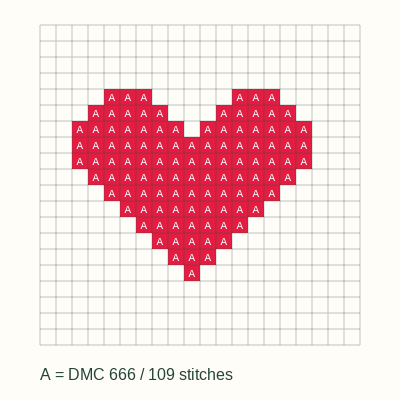
Original artwork. Generated with this converter at a 20-stitch width, 4-color limit, no dithering and no smoothing. Transparent borders stay unstitched.
Type the word, then set the grid
This cross stitch letter generator turns a word, a name, initials or a date into a counted chart. Type it in the box above, press Make the letter chart, and the same converter that handles photos draws your word as squares with a symbol for every stitch. Capitals are clearer than lowercase at small sizes, and nothing is uploaded.
How many stitches a letter needs
Seven to ten stitches tall is the minimum for a capital to stay readable, while twelve to sixteen is comfortable and leaves room for a second colour around the edge. Because the grid is set from the width of your whole word, a longer word needs a wider pattern: at 120 stitches a five-letter word lands around 30 stitches tall, whereas one initial at 40 stitches is already generous. Type a space between letters to keep them from touching.
Alphabet charts, dates and two-line projects
If you want a whole alphabet instead of one word, type the letters you plan to use with spaces between them and export the chart as a reference sheet to keep at the craft table. A date such as 2026 works the same way, and initials are the fastest first project anyone can finish in an evening.
Two separate lines are not supported inside one chart. Make each line as its own chart, export both, and check that the shared letters resolve to the same DMC number before you stitch them together.
What you get out
Symbols, Stitches and Colors views work exactly as they do for a photo: Symbols is the view you follow, bold lines mark every ten stitches, and Download PNG, Download PDF and the CSV thread list all carry the DMC references your letters actually used. A one-colour word usually keeps the thread list to a single line, which makes this the cheapest possible first project.
Keep the chart readable on fabric
A word stitched in one dark colour on light fabric reads at a distance, which is why initials and names are the usual first letter projects. Two colours work when one of them is used as an outline rather than as shading. If you plan to stitch on a dark fabric, invert the idea: check the thread key and pick a light shade for the letters instead, because the chart shows thread colours, not fabric.
Print the PDF and keep the thread key next to it. The numbers are what you shop with; the symbols are what you stitch from.
BEFORE YOU THREAD THE NEEDLE
Frequently asked questions
Are my photos uploaded or saved?
No. The converter uses Canvas and a local browser worker. Photos and crop data stay in page memory and are not uploaded. Save exports before closing; the page does not keep an editable project.
How many stitches tall should a letter be?
Seven to ten stitches tall is the minimum for a capital to stay readable, and twelve to sixteen is comfortable. Letters drawn in a bold serif look better than a thin one because each cross covers a whole square. If the preview looks like a smudge, raise the pattern width instead of the colour limit.
Can I type lowercase letters or a symbol?
Type up to 24 characters: letters, digits, spaces and common punctuation. Capitals read best, and lowercase letters such as e and a lose their counters below about ten stitches. Accents are supported if your keyboard produces them, but very tight pairs like fi may merge at small widths.
Does the letter chart come with a thread key?
Yes. The chart is built exactly like a photo conversion: a symbol for every stitch, bold lines every ten stitches, a DMC thread key, a CSV shopping list and a paged PDF. A one-colour word usually resolves to one thread number, which makes it a cheap first project.
Can I put a name and a date on two lines?
Not in one chart. Make each line as its own chart, export both, then check that the shared letters use the same DMC number before you stitch them together. Two short lines on one chart is something this version does not do; drawing, backstitch and fonts beyond the built-in bold serif are also not included.